Not sure if you have noticed Today that Google has renamed Container Engine to Kubernetes Engine. A quick search leads me to a article on Google Cloud blog - Google has been working with the Cloud Native Computing Foundation (CNCF) and the Kubernetes community to create the Certified Kubernetes Conformance Program. The Certified Kubernetes program officially launched today, and … Continue reading Putting the K in GKE
Enable HSTS in Akamai
What is HSTS? It stands for HTTP Strict Transport Security. Simply speaking, HSTS is a method that allows the browser to do http to https redirect. Why use HSTS? Security! As explained above, the http traffics only stay inside the machine, so it reduces the risk of exposing sensitive information in plain text to the Internet. … Continue reading Enable HSTS in Akamai
CICD on OpenShift Part One
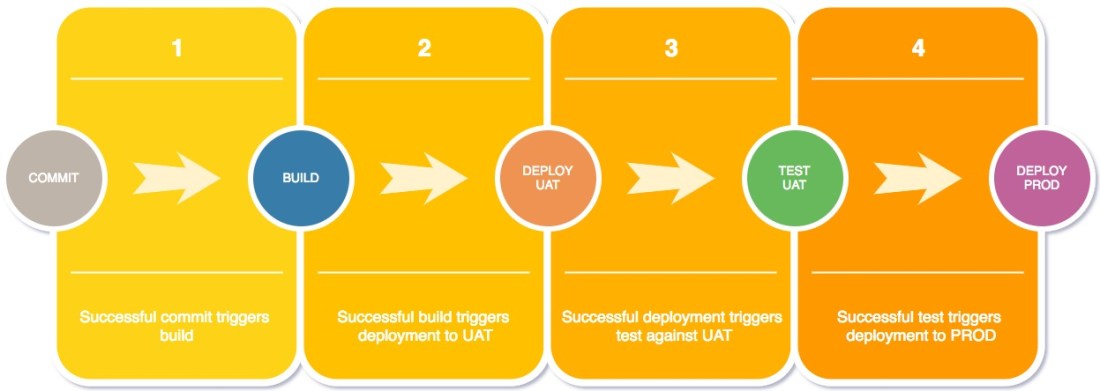
I have successfully migrated 'Dilbert' from EC2 instance to OpenShift. Dilbert is an automation bot that we use to offload some daily operations. In this article, I will show you how it works. In the Dilbert project, I have one build configuration. For each version, I only build once. This to ensure only one binary … Continue reading CICD on OpenShift Part One
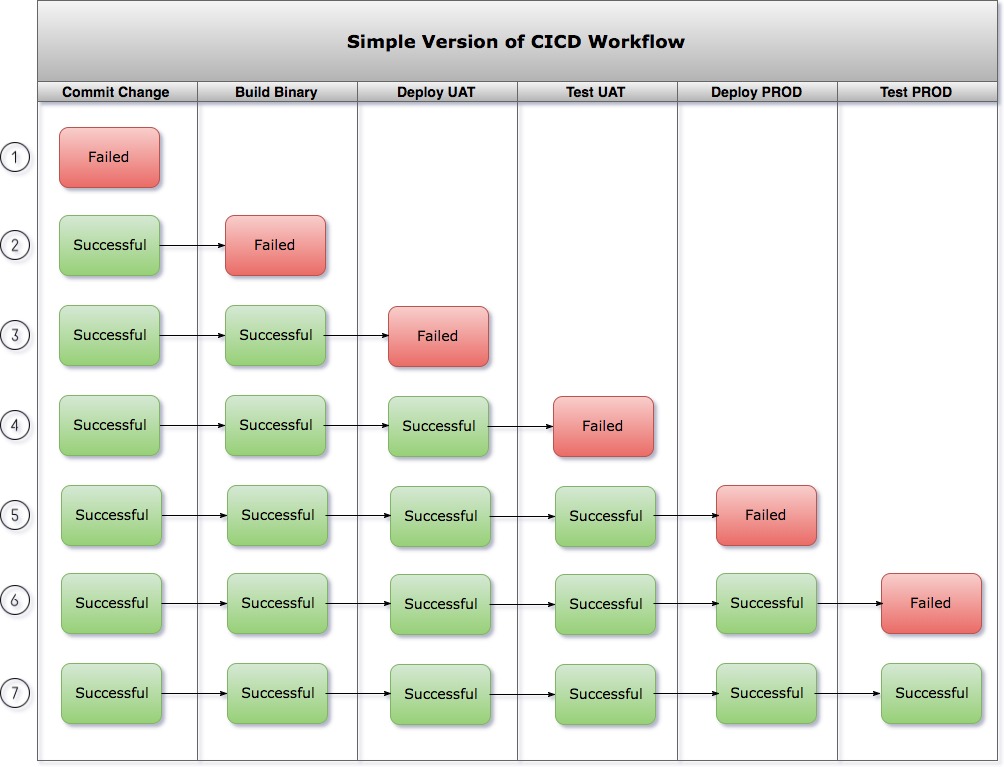
Simple version of CICD Workflow
Above is my simple version of CICD workflow that I use as a guidance in day to day work. A bit explanations on how to use it. The workflow has six stages and seven scenarios. Six Stages: Commit Change: When user commit changes to code repository. Build Binary: When CI server builds the binary to … Continue reading Simple version of CICD Workflow
Horizontal Pod Autoscaling
I did a quick test of the HPA (Horizontal Pod Autoscaling) on OpenShift, here are some key findings: Heapster metric is not near realtime, it is about 2 minutes delay in my test. HPA only has one threshold to decide when to scale up or scale down. I think it makes sense, as pods normally … Continue reading Horizontal Pod Autoscaling