AWS recently released the new version of AWS Well-Architected Framework, I just had a quick look. The biggest change to me is that the Architecture design principles (they call it pillars of the framework) have increased from 4 to 5. Now the 5 pillars of the framework are: Operational Excellence Security Reliability Performance Efficiency Cost … Continue reading Updated AWS Well-Architected Framework
Tag: AWS
EKS is now generally available
Finally finally, EKS is now generally available. It took roughly half year to arrive here since the announcement in last ReInvent. If you ever used kops before, then you will feel that the way how they build k8s cluster is very similar. Except that AWS manages the master nodes for you. I had quick look … Continue reading EKS is now generally available
EC2 fleet at first glance
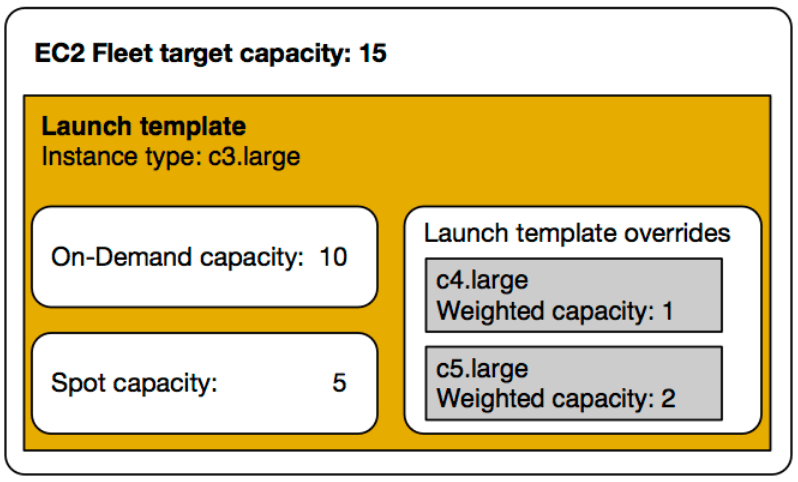
I was working on a project called SpotOn last year. The basically idea is to use Spot fleet whenever possible. If the pool size is lower than the threshold, then CloudWatch will trigger a Lambda function to scale up the on-demand EC2 to pick up the workloads. Check this out if you want to know … Continue reading EC2 fleet at first glance
What is kube-aws?
Have you read my previous post Install Kubernetes on AWS with kops? If yes, then kube-aws is an alternative to kops. If you have not, then kube-aws is an open source tool that simplifies the installation of Kubernetes on AWS. I have not tried kube-aws yet, but I will when I need to build another … Continue reading What is kube-aws?
Use AWS EFS for Kubernetes
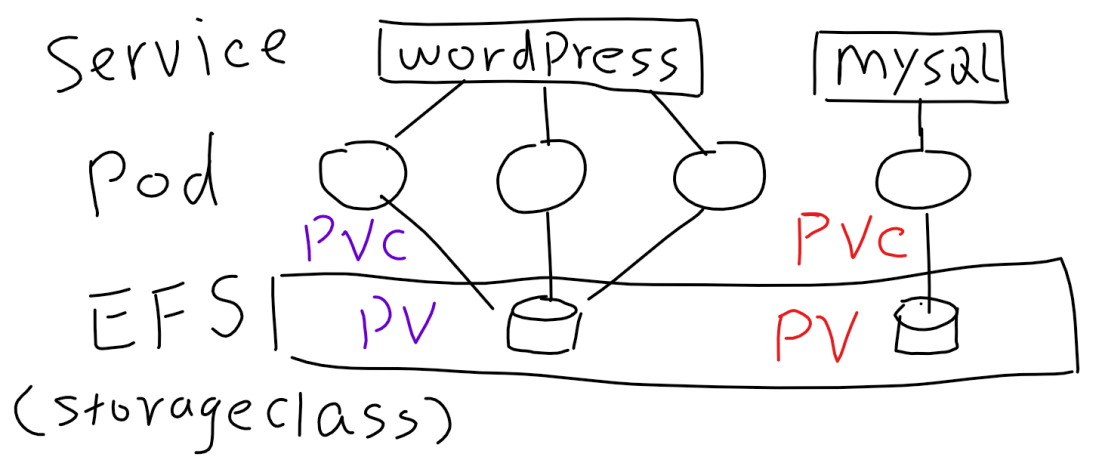
Before introducing how to use AWS EFS for Kubernetes, let me recap some terms of Persistent Volumes. PV (Persistent Volume): PV is a piece of storage, it can be NFS, iSCSI, EBS, EFS... The purpose of having PV is to decouple the storage from pod's lifecycle. PVC (Persistent Volume Claim): PVC provides the method for … Continue reading Use AWS EFS for Kubernetes